Menu

The National Portrait Gallery acknowledges the Traditional Custodians of Country throughout Australia and recognises the continuing connection to lands, waters and communities. We pay our respect to Aboriginal and Torres Strait Islander cultures and to Elders both past and present.

Aboriginal and Torres Strait Islander viewers are warned that this website contains images of deceased persons.

All About the Feelings

by Claire Finneran, 2 July 2025

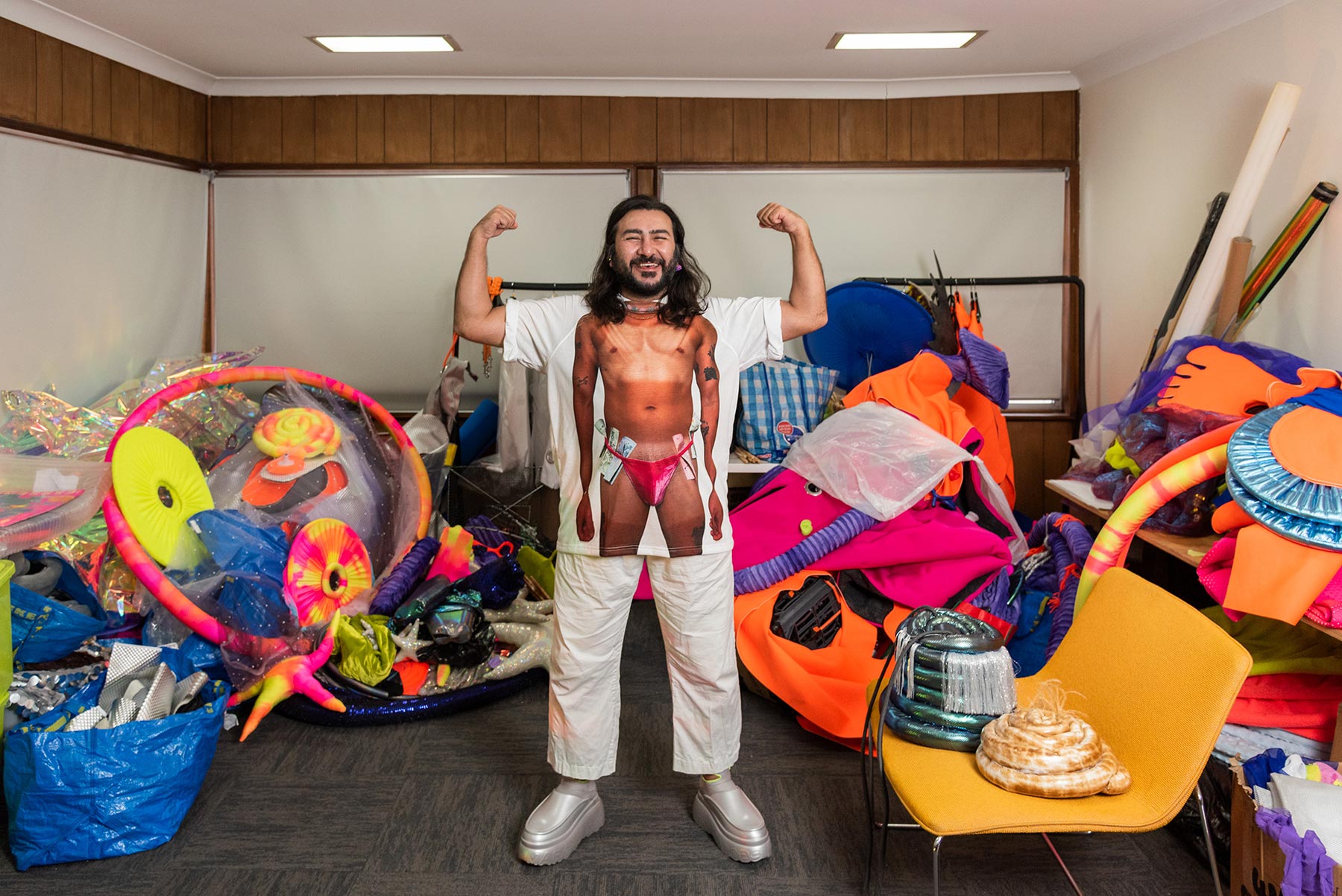
HOSSEI. Photo: Garry Trinh

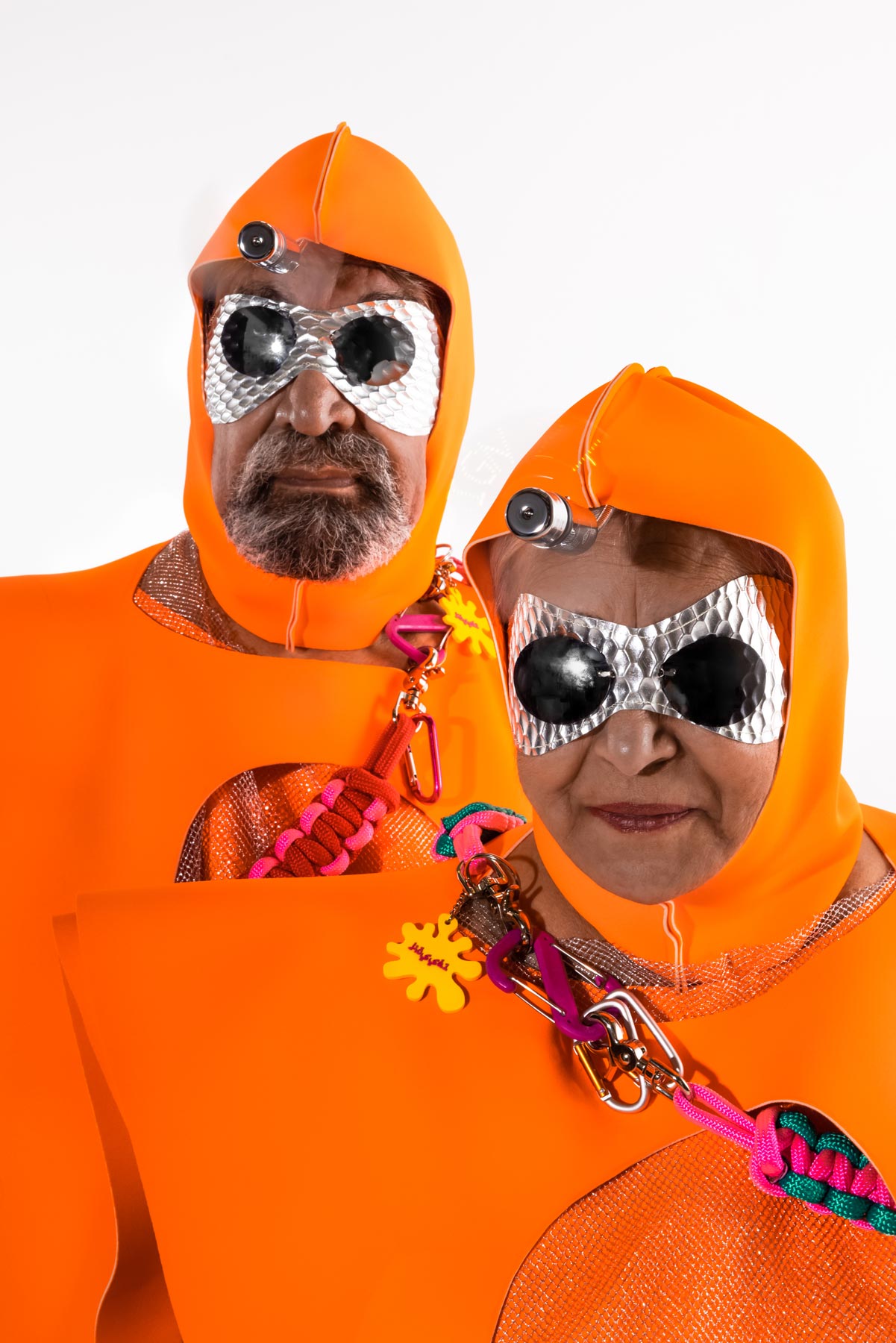
HOSSEI’s work is touchable, wearable, emotional, funny and so bombastically colourful it invites delight from intergenerational audiences. As HOSSEI reflects on the progression of his practice and the comic threads of his personal traumas and joys as a Persian artist in the LGBTQIA+ community, he reminds me of his work’s earnest intentions. ‘I’m so serious about being silly though, I hide real emotions in all that technicolour theatricality.’

HOSSEI’s practice has certainly evolved aesthetically since he first started exhibiting over a decade ago: from experimental musicals to immersive installations that feature suspended costumes, sculpture, performance, video and sound.

Born in Tehran in 1985, with Persian, Turkish and Russian ancestry, HOSSEI left with his family during the turbulent aftermath of the Iranian Revolution where he described memories of ‘bombs falling in their backyard’. Moving to Australia was complex for his parents, he says. ‘It wasn’t an easy decision. Leaving meant saying goodbye to the life they had built – their family, their friends and everything that had shaped who they were. But it was too dangerous to stay. They chose safety, hope and a new beginning.’

In 2010, HOSSEI completed a Bachelor of Visual Arts (First-Class Honours) at Sydney College of the Arts, a place where he eventually wriggled free from rigid definitions of artistic genres and excelled in the painting department under the tutelage of artist Mikala Dwyer. Here, his metaphysical interests and complex cultural and social identities could blend to inform a growing experimental practice. Simmering beneath the hotplate role of HOSSEI as an artist, however, were the low flames of loving obligation as he took on the full-time care of his mother, Nahid. He sees his career as having two separate beginnings as a result, with a five-year hiatus used to focus on caregiving until this identity too and the collaborative healing he had learned could bleed into his practice.

Since childhood, stage and film musicals have been beaming optimistic storylines, fantasy dance sequences, glittering costumes and gymnastic vocal journeys into HOSSEI’s subconscious. He absorbed the soothing escapism of The Sound of Music and The Little Mermaid and related deeply to the gritty outsiders and campy characters from Little Shop of Horrors and The Rocky Horror Picture Show. In one of his earliest public works, The OOO in Who (2011), a choir in pink and white striped tubes bounce and sing in theatrical lighting with generously applied puffs of stage fog. The performance builds to a crescendo when a long staff is jutted through their legs and thrust towards the audience, a vibrant curly Annie wig on its end. ‘It was always my mission to make a musical,’ HOSSEI says. ‘Musicals are very white and I have always wanted to deliver the other side. There’s no such thing as a Persian musical, I’m sure it exists but I haven’t come across it.’ The whiteness of Annie and other musical characters could be viewed as revered or speared in The OOO in Who: the disembodied curly red hair is both raised as if in a devotional ritual or skewered through as a threat to the musical’s portrait of privilege.

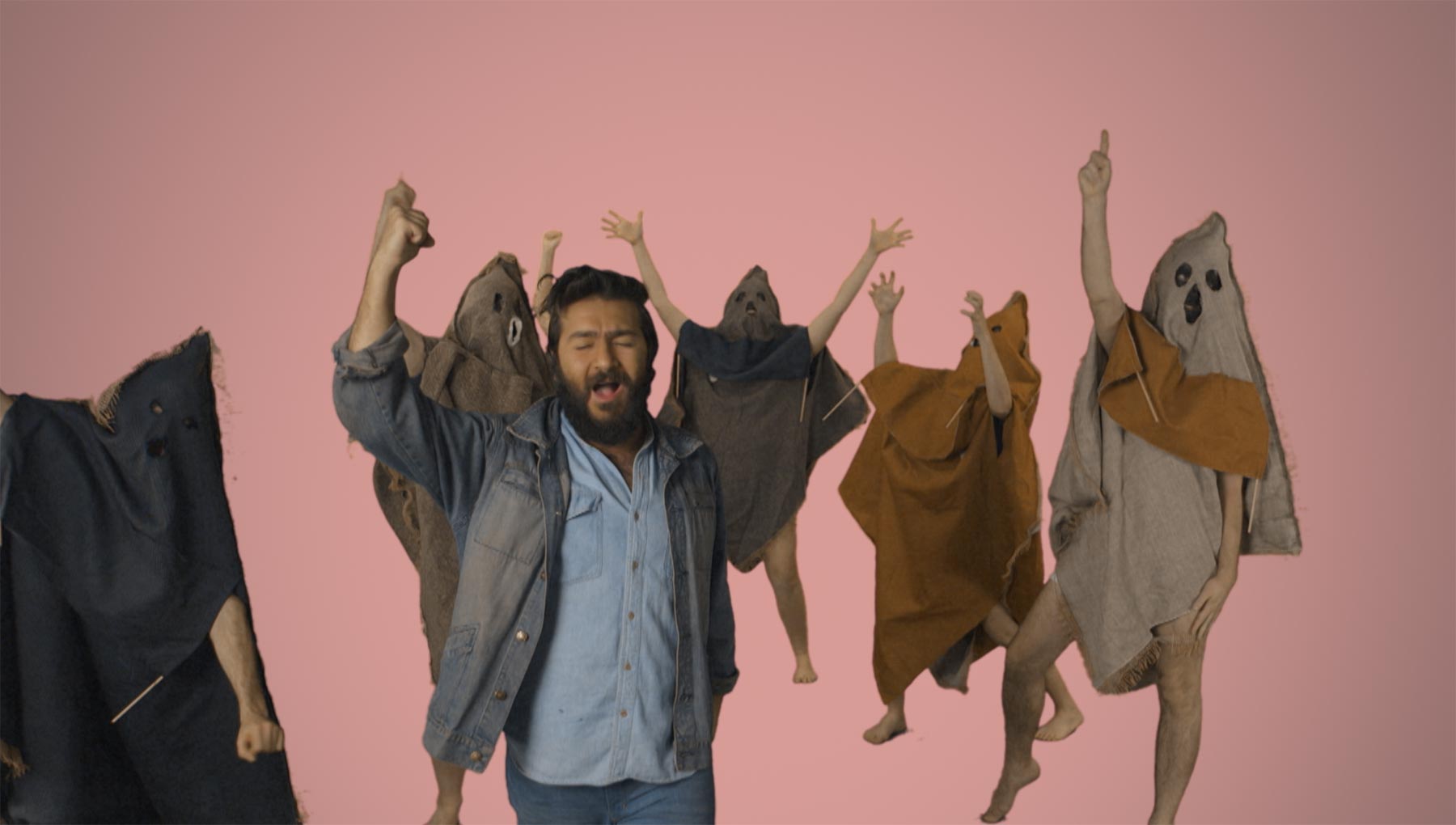
The pursuit to personalise the musical continued in TRUTH (2014) where HOSSEI appears as the protagonist. Styled like an Iranian Danny Zuko heartthrob he surreally clicks and stomps with a gang of pointy, hessian-clad figures. HOSSEI sees the lyrics of this short musical film as self-affirmations compelling him to be better. His voice is layered over those of the other performers, sonically capturing the experience of an internal whirl of thoughts and secrets.

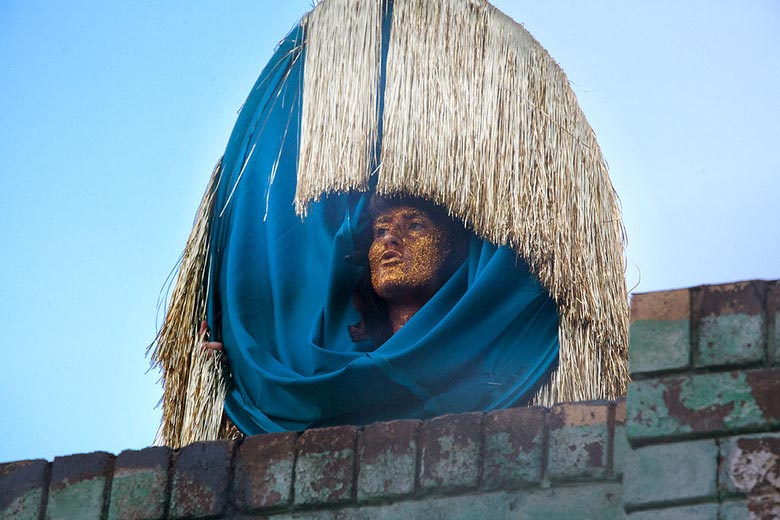
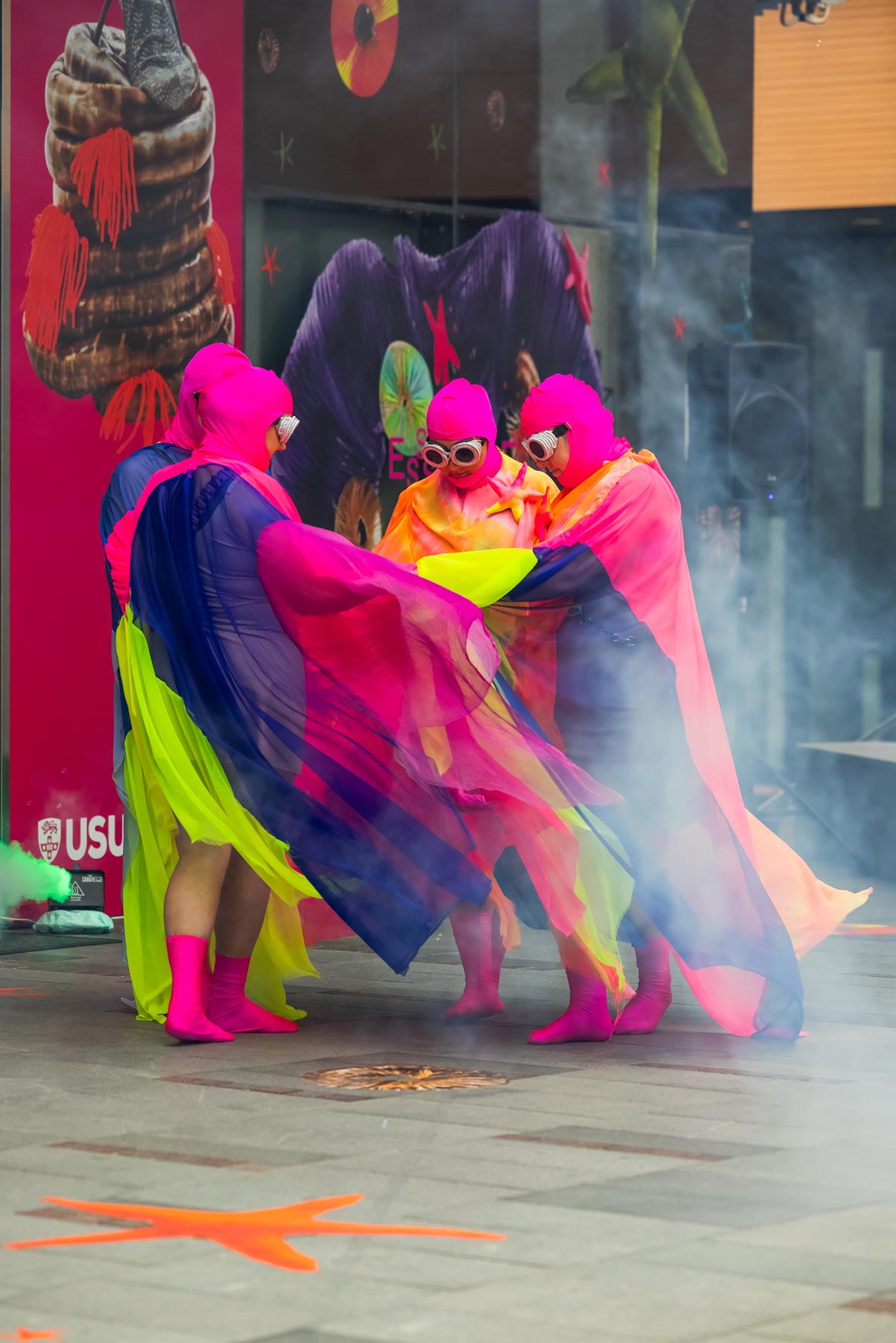
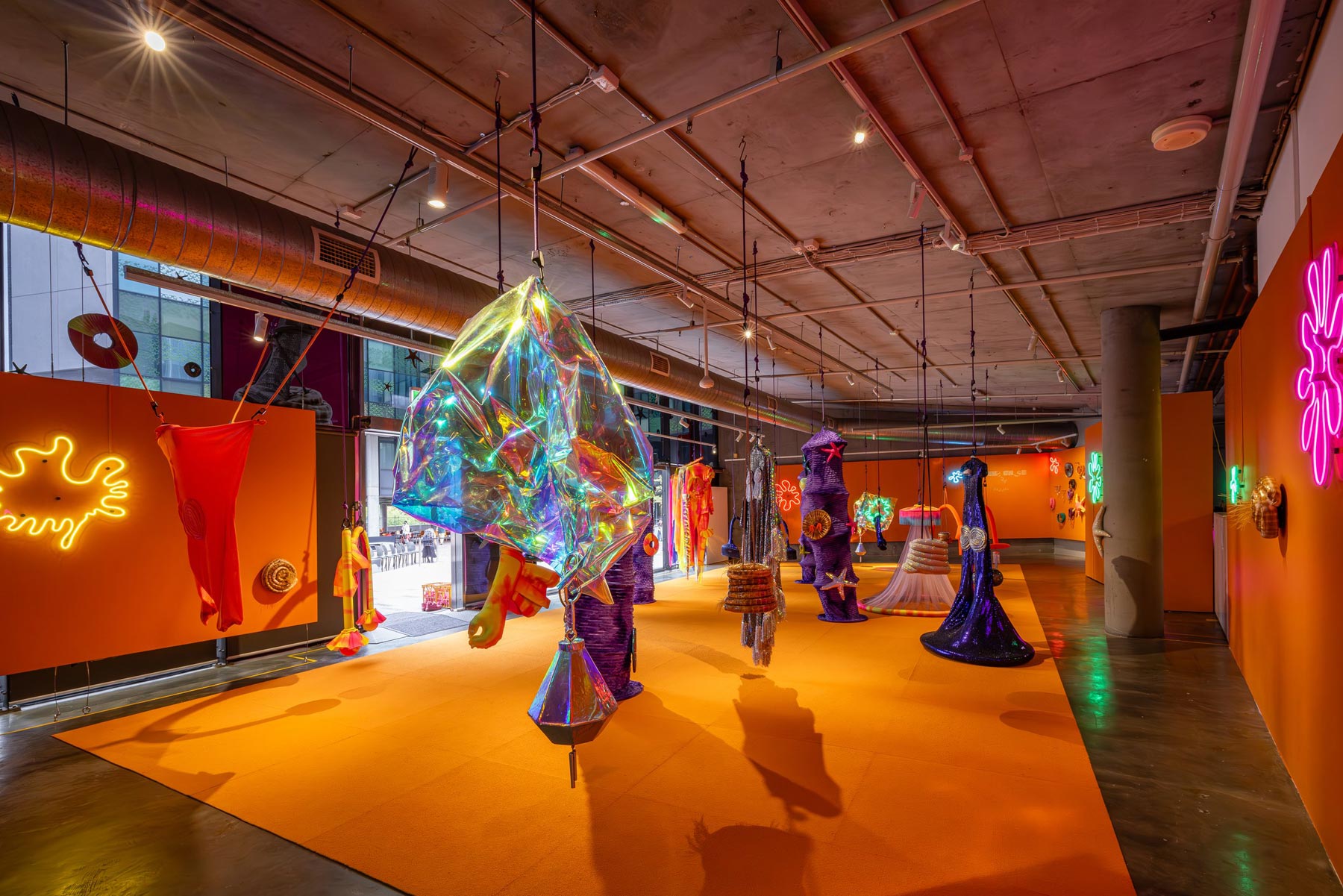
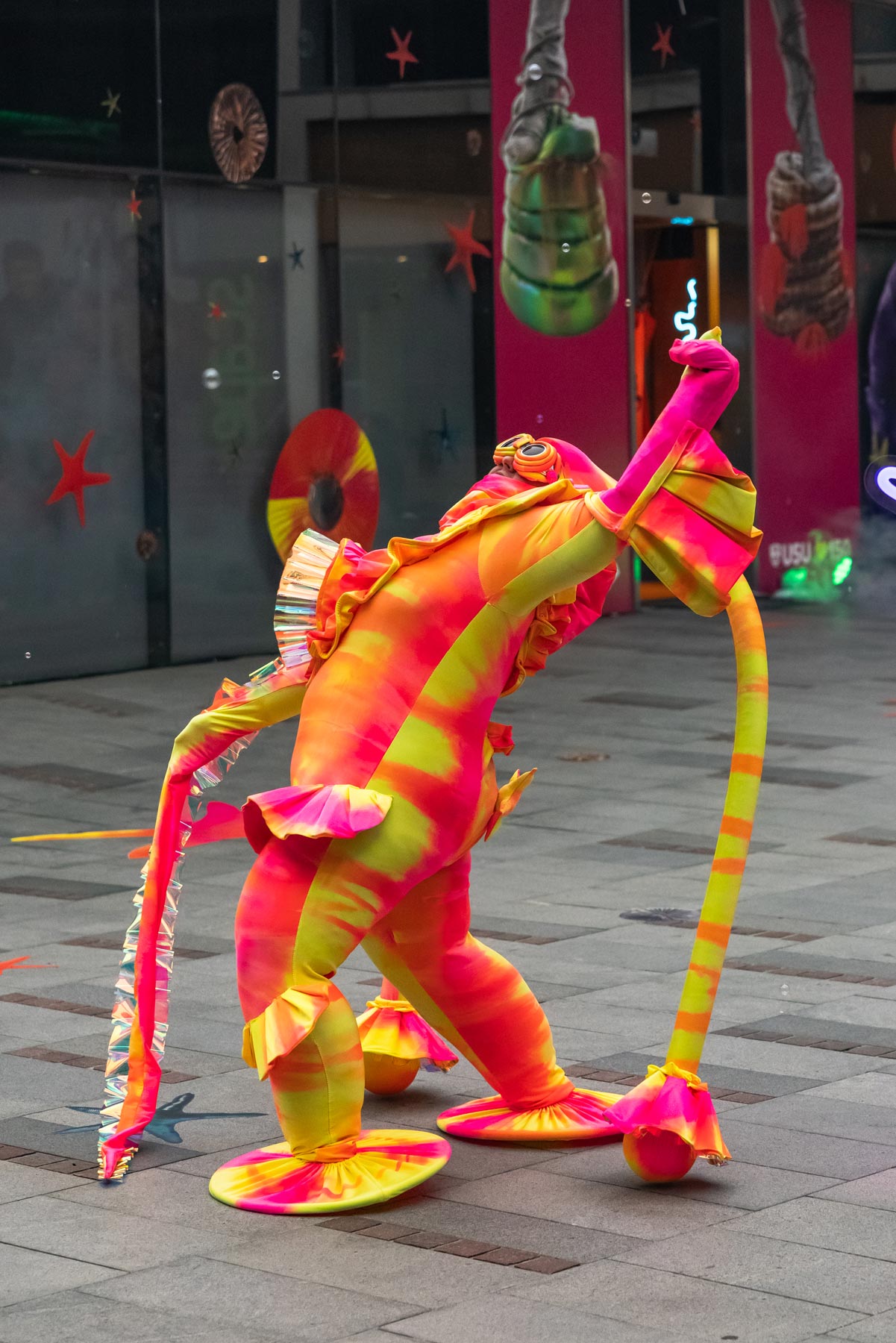
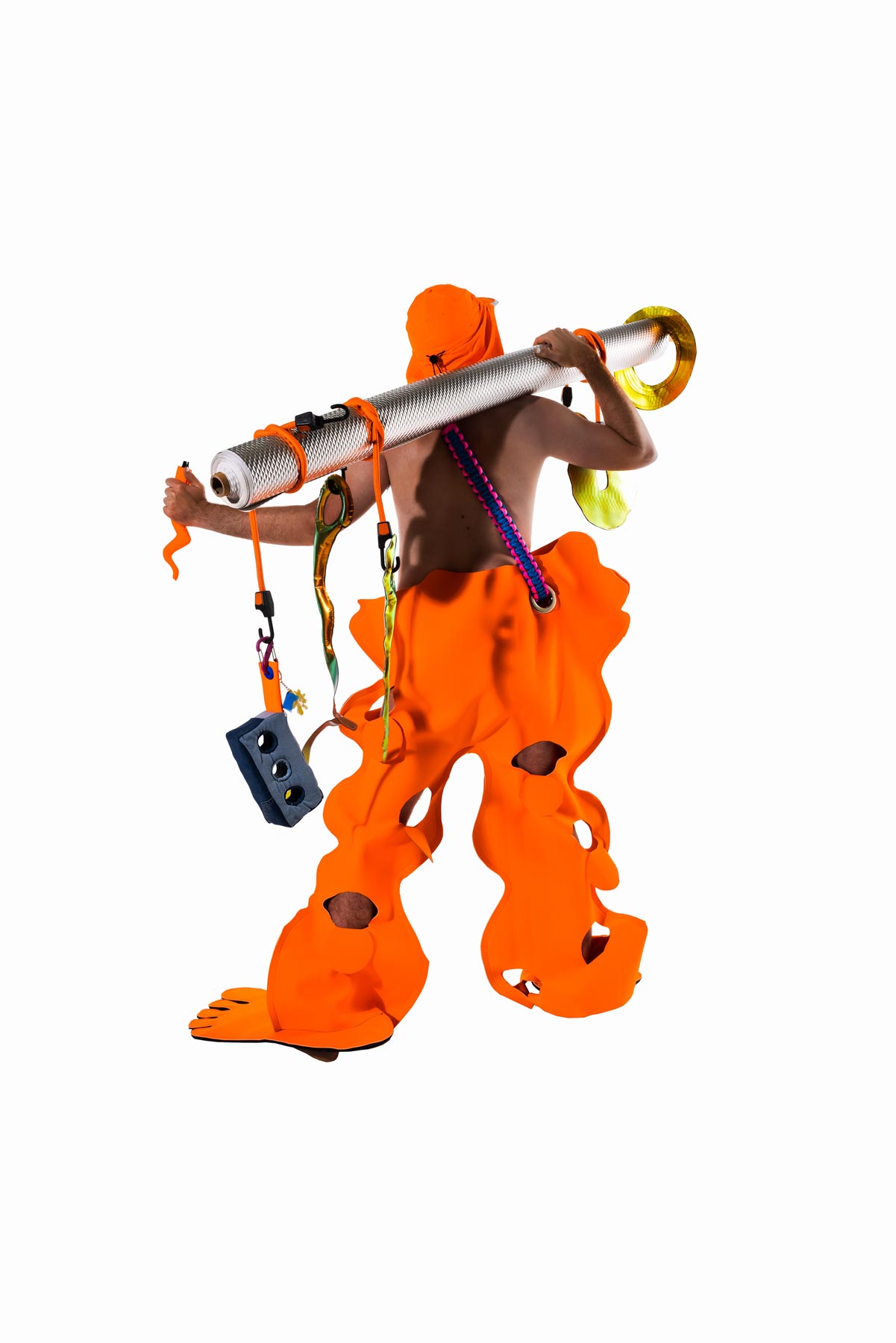
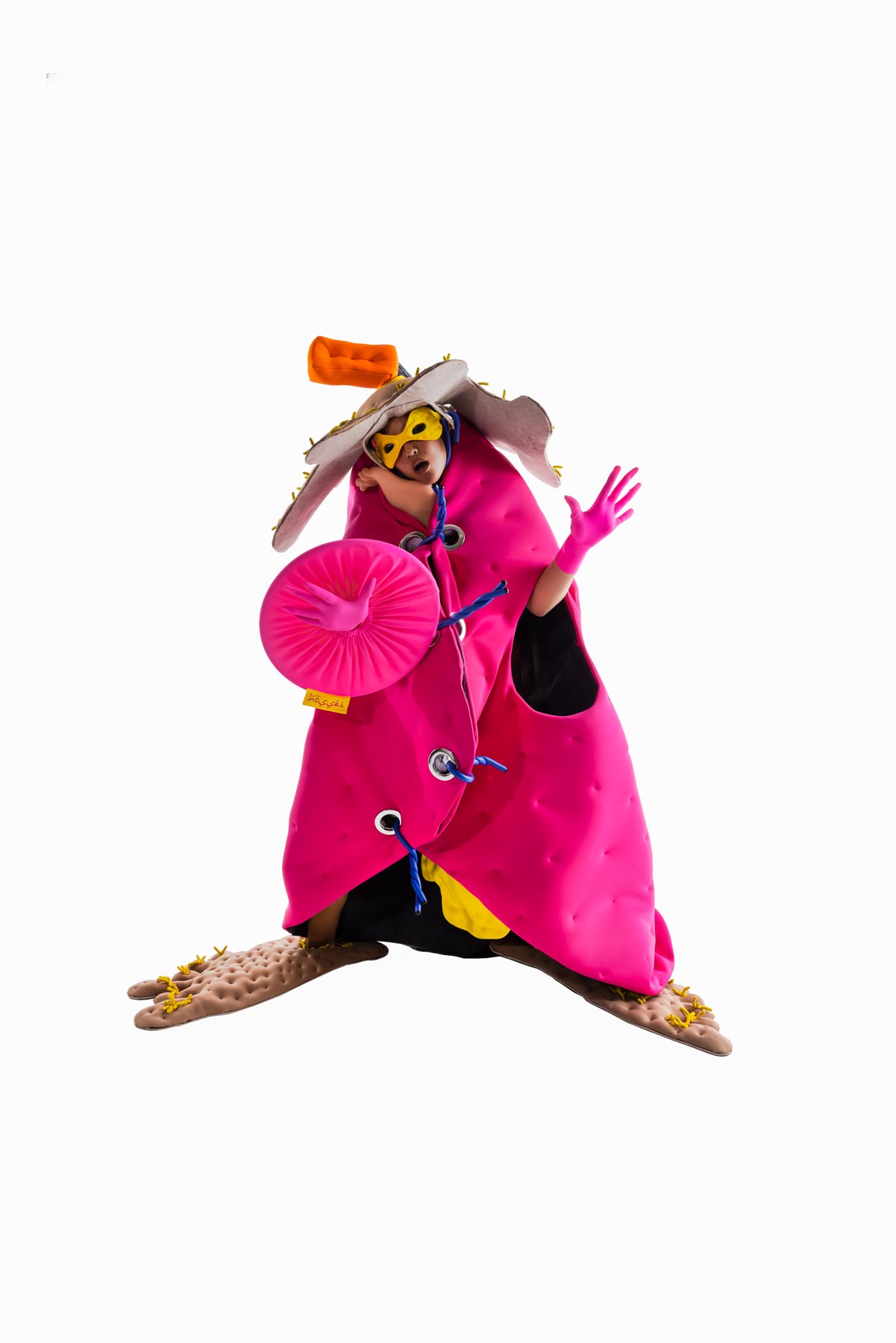
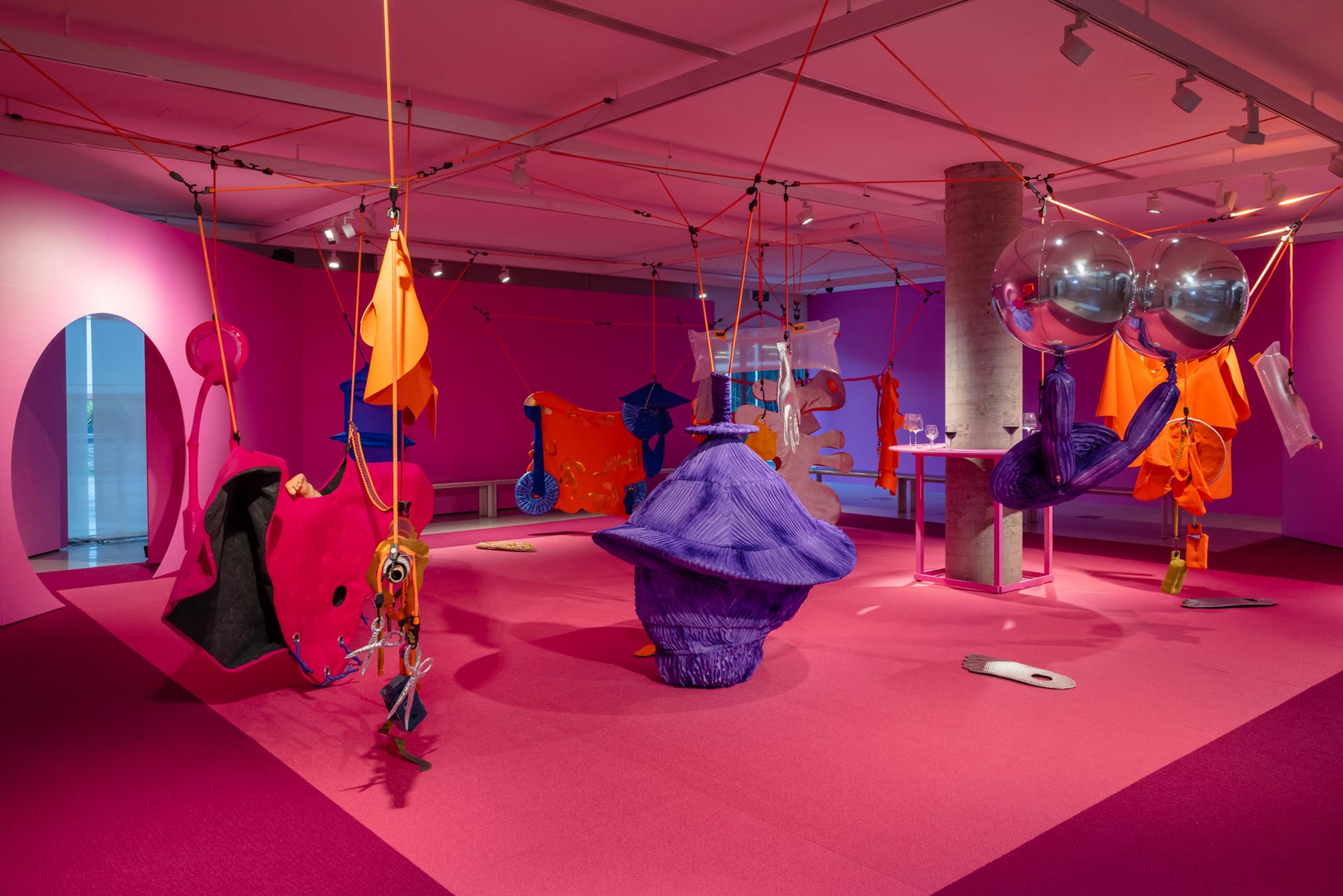
In the performance THE DEFICIENT OF SOLUTION DEVELOPMENT: QUIZZING MAKES REMEDY (2013) HOSSEI began expanding the unique identities he was creating through costume. His earliest performances, such as Ussef/Issiac I Can’t Tell which one is wearing the hat? (2010), referenced traditional Sufism costume and ritual. Over time he stitched more autobiographical detail and fantasy into his costumes, using them as vehicles for myth-building and storytelling. This personal style became most realised in O (2023), an immersive installation that felt like entering a space where the party has just ended, the fabulous guests leaving clues and biographical ephemera behind for you to touch, observe and piece together. O and later ESSSENSSSE (2024) included performances that emulated wonky fashion week catwalks, the gallery spaces gradually filled with the garments, hung up after the characters had finished with them. The costumes lived on in the exhibitions as vacant portraits of their mythical wearers that could be worn by the viewer as a gesture of inclusion – inviting them to inhabit the identities. Scattered around these wearables were curious accessories and objects that had been given reverence, such as vapes, glassware, starfish and scissors. ‘You know in those 18th-century portrait paintings where they have all of these symbolic objects and belongings scattered around them to tell a story about who they are?’ he observes. ‘I like to think I pluck those objects out of the frame and use them as the portrait.’

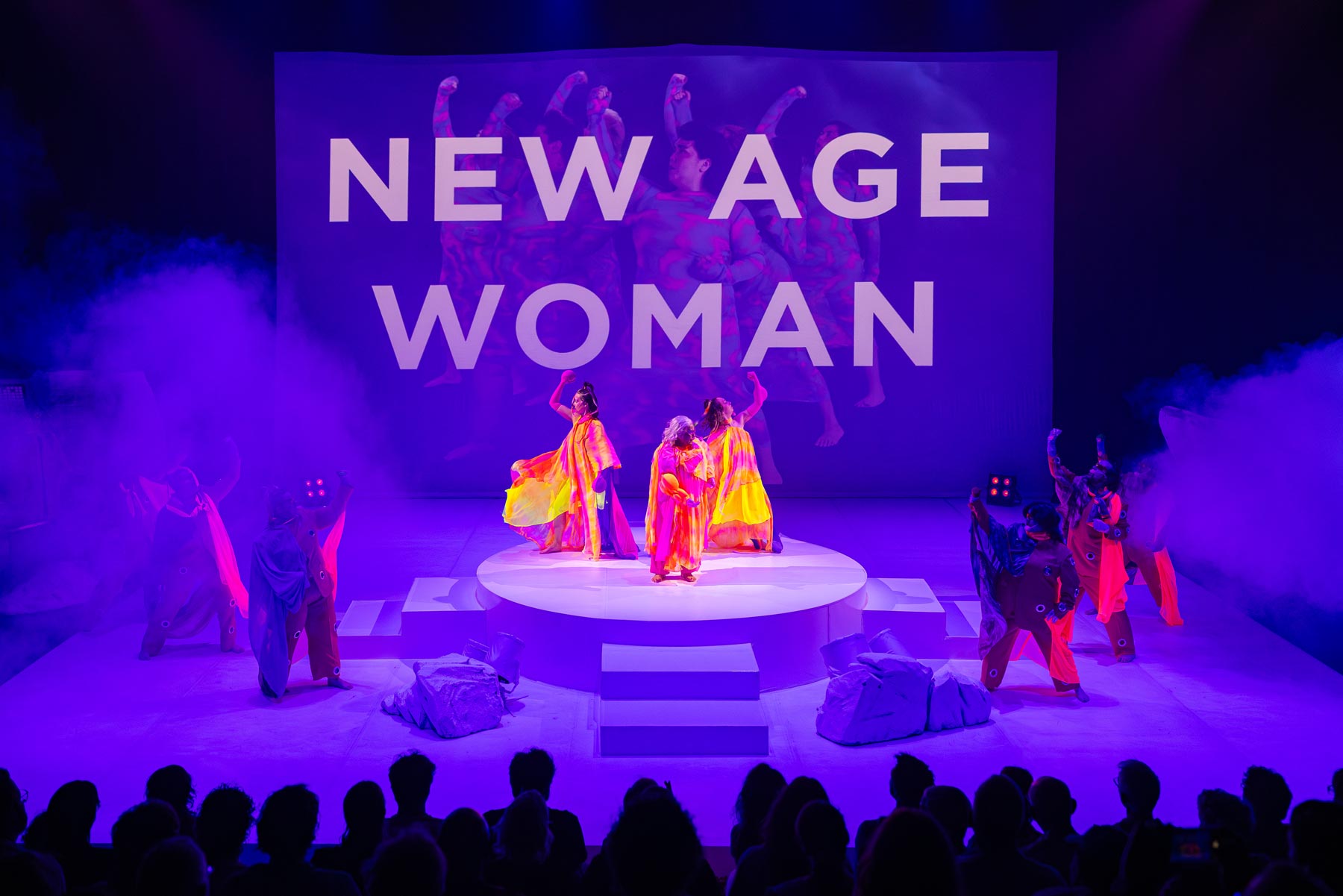
1 2 3 ESSSENSSSE, installation view, Verge Gallery, Sydney 2024 All HOSSEI. Photos: Jacquie Manning

Portraiture is classically defined as showing an explicit, unveiled face, but HOSSEI’s approach expands this rigidity. The body and facial features appear in HOSSEI’s work in abstraction, or are stripped down to their rawest forms – the mouth or anus simplified as primal exits and entries. His early installations used photographic portraits of Zeki Müren and Whitney Houston to give a face to the narrative threads he was offering, but he became more interested in the impression of a person’s scent and vibe in your memory or the traces of things a character leaves behind as a means to portray them.

In THUNDERBLOOM (2023) HOSSEI uses autobiographical detail mixed with sci-fi to paint a sensory portrait of his mother. Fulfilling his Persian musical aspirations, he wrote an album of pop songs inspired by Nahid’s life and their journey together as their relationship oscillated through caregiver roles. Presented at Melbourne’s West Space as music videos, the exhibition garnered strong reactions from viewers, particularly those who were children of migrant parents. In his curatorial essay, Sebastian Henry-Jones wrote, ‘the medium for HOSSEI’s THUNDERBLOOM is not so much sound or video as it is emotion, and the critical importance of feeling emotional within a journey of healing’.

The musical moved to the stage in THUNDERBLOOM: LIVE (2024), scaling up HOSSEI’s performance practice. He built on the original album to more explicitly reference sci-fi and musical themes: the hunger of Audrey II from Little Shop of Horrors, the complexity of motherhood portrayed in the Alien film franchise, the depictions of the afterlife in Grease and the release felt by Audrey Hepburn dancing in the beatnik bar in Funny Face. Nahid was the leading lady on this dreamlike stage, dancing and singing about her medications, aging and the cosmos. ‘In Iran women can’t sing publicly or become popstars, so for me it was very powerful to give the stage to an older Persian lady and give her the space to sing about what she wanted to sing about,’ HOSSEI says. Nahid did just that with a solo version of ‘Bogzar Az Kuye Ma’, a rebellious and vengeful love song she had been singing since the age of 12.

By exposing the care of his mother, HOSSEI’s work has also sought to model and mould ways of healing. In O, for example, healing as his conceptual framework is expressed through sensory toys, breathwork and time travel. In THUNDERBLOOM his mother’s interior landscape came to life with pain and relief expressed aurally and through a hyperpop aesthetic. In ESSSENSSSE he explored the tenacity of the human spirit through squishy sea creatures and the rejuvenating pleasures of the ocean.

1 O, UTS Gallery & Art Collection, Sydney. 2023. 2 O, UTS Gallery & Art Collection, Sydney. 2023. 3 O, UTS Gallery & Art Collection, Sydney. 2023. 4 O, installation view, UTS Gallery & Art Collection, Sydney. , 2023. 5 O, UTS Gallery & Art Collection, Sydney. 2023. All HOSSEI. Photo: Jacquie Manning © HOSSEI

Exploring shifting perspectives and personas, HOSSEI’s work invites introspection and reflection on how we see ourselves and how others see us. HOSSEI encourages the viewer to be present, propelled through his harmonised portrayals of the interior and exterior possibilities of identity.

© National Portrait Gallery 2026
King Edward Terrace, Parkes
Canberra, ACT 2600, Australia

Phone +61 2 6102 7000
ABN: 54 74 277 1196

The National Portrait Gallery acknowledges the Traditional Custodians of Country throughout Australia and recognises the continuing connection to lands, waters and communities. We pay our respect to Aboriginal and Torres Strait Islander cultures and to Elders past and present. We respectfully advise that this site includes works by, images of, names of, voices of and references to deceased people.

This website comprises and contains copyrighted materials and works. Copyright in all materials and/or works comprising or contained within this website remains with the National Portrait Gallery and other copyright owners as specified.

The National Portrait Gallery respects the artistic and intellectual property rights of others. The use of images of works of art reproduced on this website and all other content may be restricted under the Australian Copyright Act 1968 (Cth). Requests for a reproduction of a work of art or other content can be made through a Reproduction request. For further information please contact NPG Copyright.

The National Portrait Gallery is an Australian Government Agency