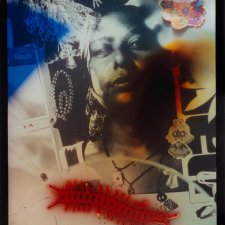

Look
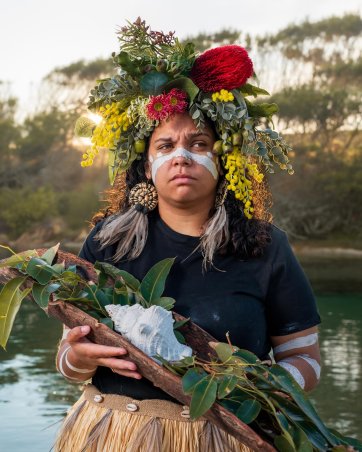
- Invite students to spend time carefully observing one portrait.
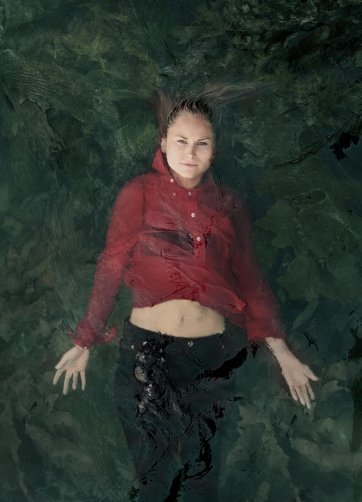
- Ask students to look at their chosen portrait for at least one minute. Encourage students to consider facial expression, gaze, pose, clothing and mood.
- Invite students to think of a single word to describe the subject based on their observations.
- Next, invite students to imagine a thought bubble protruding from the subject’s head. What might they be thinking?
Discuss
- Invite students to discuss their observations as a class while viewing the portraits side-by-side.
- Ask students to share what they’ve noticed and consider how identity is represented and perceived in each of the works.
Discussion prompts:
- What aspects of the subject’s identity is being highlighted in the portrait?
- What aspects of the subject’s identity is missing or implied?
- Can a single portrait ever reflect a person’s identity? Why or why not?
Connect
- Invite students to read one of the artist’s statements and reflect on the complexities of identity.
- Ask students to consider how personal, cultural, historical and social influences can shape identity over time.
Inquiry prompts:
- How does the portrait show multiple aspects of the subject’s identity?
- What does the personal relationship between the artist and subject reveal about their identities?
- Does the artist’s statement surprise, confuse or resonate with you? How do your personal, cultural and social experiences influence your understanding of someone else’s identity?
- What do these portraits reveal about Australian identity?
- How does our identity change as we age or grow?
Create
- Invite students to explore the representation of a multiplicity of identity through the following creative exercises.
Creative prompts:
- Natalie Grono’s Blue Tongue explores the idea that in times of change, people can be both fragile and strong.
- Divide a sheet of paper in half. On one side, create a drawing that represents fragility and on the other side, a drawing that shows strength. What colours, lines and shapes will you use?
- Sean Kinchela’s Past, PRESENT, Future explores cultural heritage and identity and how people find strength through their communities.
- Create a zine that explores your connection to a community. Consider what makes you proud to be part of that community, how your community strengthens you and how you may represent diversity in your community. You could collaborate with someone from your community on one page. How may each of your identities be revealed?
- Stuart Spence’s Grace Tame – Between the Sea and the Sky explores identity as something in constant flux and questions whether identity can ever be completely known.
- Draw an abstract line on paper using pencil and an eraser or charcoal and a blending stick. Erase part or all of the line, then draw another. Repeat this process of drawing and erasing to create a layered drawing that changes and evolves. Can the drawing ever be truly complete?