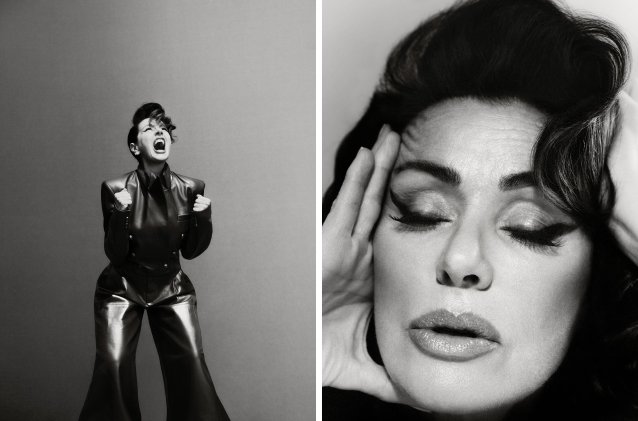
Tina Arena AM and Georges Antoni on creating the portrait, and seeing it for the first time at the National Portrait Gallery.

Tina Arena AM and Georges Antoni on creating the portrait, and seeing it for the first time at the National Portrait Gallery.
Well, we met on the day of the shoot, right?
Well, not technically for me. I met Tina Arena when I was five years old. You met Georges Antoni.
I did. Correct, I did. And I remember when I walked in, seeing Georges’ face was like watching a beautiful sunset. His face was so luminous and so, and so full of joy, I just thought, "I think it's going to be a really great thing".
I grew up in a small town of 1,000 people, seven hours to the closest traffic light, in the middle of Queensland. I was born to a migrant family, Lebanese family. My mum and dad came out escaping the war, having left a beautiful life in Lebanon to forge a better life for my sisters and I, have three oldest sisters. all who are incredibly wonderful women. So in a way, I didn't realize that I was different because I just didn't really know anything else.
I was born in Melbourne in Swanston Street. It was a pretty beautiful childhood. I didn't speak in English till I was five. I got onto TV, loved it, did something I loved it, but then was confronted with judgment, and bullying at a pretty early age. It is what it is. But I think that it also toughened me up because I had to survive all of that being an ethnic child on TV too in the 1970s when it really wasn't something that people knew a great deal about. I never really grew up liking myself. I wanted to be the blonde girl blue-eyed with a surfboard and that's what I was. I wanted to be, you know, Sorrento Moon was partly about that. It was me gazing at Sorrento Back Beach when I was like 15, 16, you know, when the family would go down for summers and stuff and we'd sit on the beach and I'd be looking at all the boys and none of them had ever come to me. I wasn't the flavour.
Being captured visually, I've never really had a great deal of confidence with the way that I looked. People always considered me a voice, but they never really saw anything beyond that. When it came to photos, I did struggle. I didn't have a great deal of confidence. Some shoots have been easier than others. I just never kind of thought that I wasn't up to standard to be the subject of somebody who is so brilliant. So I thought, oh my God, I don't know how I'm going to do this. But then seeing his face, I just went, "okay, I'm in the right place with the right people and I just have to surrender". And I surrendered. I hope that people can take out the many layers of emotions that that come through those pictures. I hope they just don't go and look at that photo and go, "Oh, that's a photo of Tina taken by Georges Antoni". I hope that they sit there and look at those photos and I hope that it evokes something in them and that they can appropriate whatever those feelings are to themselves, that they can identify with that. It speaks so loudly and it's really indicative of my culture as well. Oh. Okay. It's not a fashion portrait. It really is a study of an energy. And that's what I looked and went, "shit". That's why I gasped when I saw it, I went, I went, "Oh, good God", I've never seen myself captured like that, and what I loved about it was it captured my essence, my culture, where I come from, what I live, my history, my present, possibly my future. It was all there.
There is so much depth and complexity and it all is derived from the one fantastic fantastic, motivating place. She's got such goodness in her heart and that radiates.
The duality, that's a, well, that really encapsulates it. It's a softness and a dreaminess. And then there's this scream and this, yeah, this fight, because you've got to fight.
In each of those photos, Tina can be perceived as having two very different feelings in it. One of the photos it looks like she could be screaming, the other one looks like she could be singing with joy. One photo looks like she could be sad. And in the same time, if you look at it in a different way, it looks like she could be very quietly introverted. And I think that's a great gift to give to people that are looking at those photos.
I don't have a problem with people coming in and seeing that. It would have been pretty shitty had I not liked the photo.
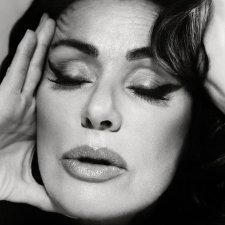
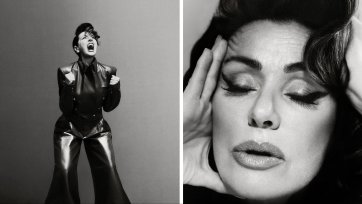
Jacqueline Maley talks to Tina Arena and Georges Antoni about the Gallery’s new commissioned portrait of the Australian music icon.
Visit us, learn with us, support us or work with us! Here’s a range of information about planning your visit, our history and more!
We depend on your support to keep creating our programs, exhibitions, publications and building the amazing portrait collection!