

Emily Hunt’s portrait of artist and occultist Rosaleen Norton (1917–1979) depicts a controversial cultural figure in Australian history, whose artworks and writings challenged social conventions. Norton first garnered media attention when she exhibited a series of spiritualist drawings at the University of Melbourne in 1949. Police raided the exhibition to confiscate works and place obscenity charges on Norton, which were later dismissed in court. Sensationalised by the press as the ‘Witch of King’s Cross’, Norton became synonymous with public fascination surrounding the occult in postwar Australia.
Norton stands at the centre of Hunt’s composition before an altar emblazoned with the word ‘Weplon’, referring to a mythical creature drawn from her own artistic mythology. Her face is marked with symbols reflecting her ideas about art, interconnectedness and the afterlife. Throughout the Chain of being series, Hunt reconstructs locations around Sydney that she describes as ‘psychically charged’ to ‘banish banality’ and ‘re-enchant’ the city. Drawing on the visual language of early cartography, Hunt transforms Sydney into a symbolic landscape where sites associated with Norton’s life, including Darlinghurst Gaol and Callan Park, become places of memory and spiritual inquiry.
Gift of the artist 2025. Donated through the Australian Government's Cultural Gifts Program.
© Emily Hunt
Emily Hunt (2 portraits)

On one level The Companion talks about the most famous and frontline Australians, but on another it tells us about ourselves.
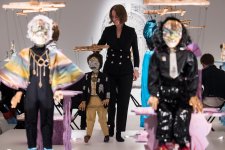
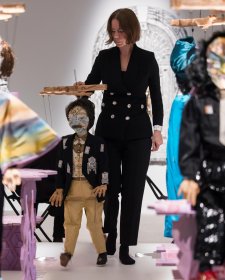
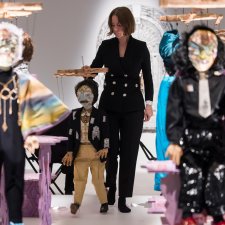
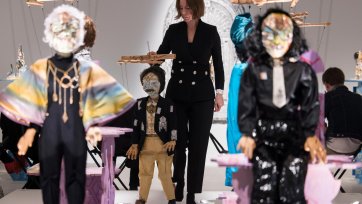
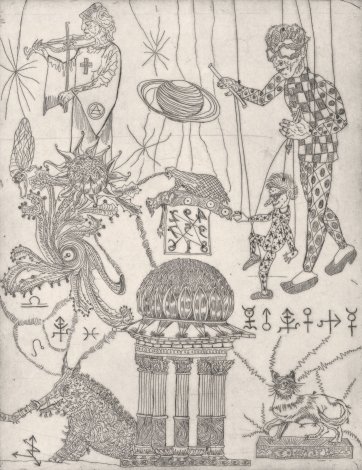
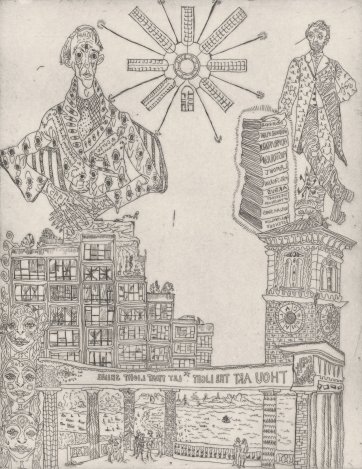
Isobel Parker Philip and Emma Kindred delve into Emily Hunt’s embellished marionettes and intricate etchings which layer history, memory and magic.
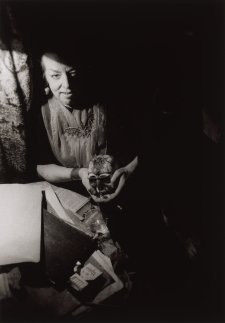
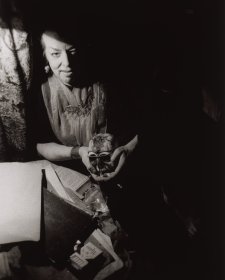
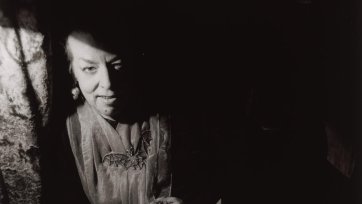
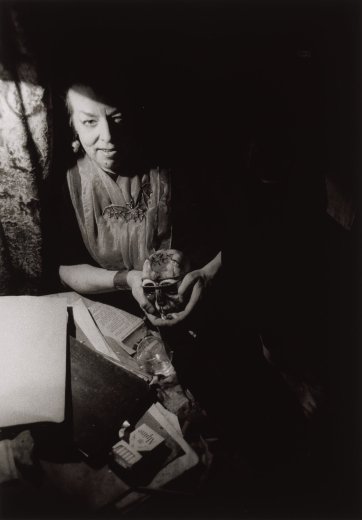
Rennie Ellis photographs the self-proclaimed 'Witch of Kings Cross'.