




© National Portrait Gallery 2026
King Edward Terrace, Parkes
Canberra, ACT 2600, Australia
Phone +61 2 6102 7000
ABN: 54 74 277 1196
Search / patricia piccinini


Gift of an anonymous donor 2019

Patricia Piccinini (b. 1965) is an artist best known for her mutant life-like creatures rendered in silicone and her iconic hot-air balloons.
1 portrait in the collection

Patricia and Allissa on making a portrait together.

Patricia Piccinini was born in Sierra Leone and grew up in Canberra. She received a BFA from the Victorian College of the Arts, Melbourne in 1991. In 1994 she initiated The Basement Project Gallery in Melbourne, which she coordinated until 1996. Her 2003 exhibition We Are Family represented Australia at the 50th Venice Biennale.


Purchased 2019


Collection: National Portrait Gallery
Purchased with funds provided by Timothy Fairfax AC 2003

Collection: National Portrait Gallery
Gift of Patricia Tryon Macdonald 2005
Donated through the Australian Government's Cultural Gifts Program

Patricia Thelma Thompson OAM (née Amphlett, b. 1949), better known as Little Pattie, first appeared on Australian television at age thirteen in 1962.
1 portrait in the collection


Purchased 2021


Collection: National Portrait Gallery
Gift of David Tuckwell 2018


Commissioned with funds provided by Jim and Barbara Higgins, Sir Roderick Carnegie AC, Rupert Myer AO and Annabel Myer, Louise and Martyn Myer Foundation, Peter and Ruth McMullin, Diana Carlton, Professor Derek Denton AC, Harold Mitchell AC, Peter Jopling AM KC, Andrew and Liz Mackenzie, Patricia Patten, Tamie Fraser AO, Bruce Parncutt and Robin Campbell, Lauraine Diggins, Steven Skala AO and Lousje Skala 2017

Patricia Piccinini’s photographic series SO2 and The Fitzroy Series explore human acceptance of difference – applied empathy – through children’s interactions with trans-species creatures.
Patricia Piccinini places empathy at the heart of her practice. The tenderness of the moment dominates.

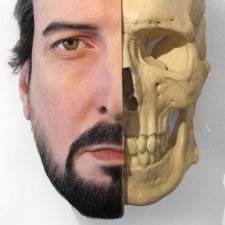
The exhibition features work from Jan Nelson, Natasha Bieniek, Patricia Piccinini, Juan Ford, Petrina Hicks, Ron Mueck, Yanni Floros, Sam Jinks, Michael Peck and Robin Eley.
Press releases and image downloads for media.

In the flesh is realised through moments of intimacy, empathy, transitions in life and the transience of life, vulnerability, alienation, restlessness, self-reflection, mortality and acceptance.